Quick Summary
A diagnostic scan reads fault codes and live information from vehicle control modules. It can show which system detected an abnormal signal, but a code does not automatically identify the failed part.
Accurate diagnosis combines scan data with symptoms, service history, electrical measurements and mechanical tests. This evidence-based process helps avoid replacing parts that are not responsible for the fault.
What a Diagnostic Test Can Check
1. Engine and Emissions Systems
The engine module monitors sensors and actuators involved in fuel delivery, ignition, airflow, temperature and emissions. A scan can retrieve stored, pending and permanent codes and display live values. Further tests may be needed to confirm a vacuum leak, pressure problem or wiring fault.
2. Transmission Operation
Compatible equipment can communicate with the transmission module to inspect codes, temperatures, commanded gear changes and selected operating data. Fluid condition, mechanical wear and hydraulic pressure still require direct inspection or testing.
3. ABS, Stability and Airbag Systems
Warning lights for anti-lock brakes, stability control or airbags may correspond to faults in sensors, wiring, modules or power supplies. These safety systems should be assessed promptly because ordinary engine-code readers may not access them.
4. Battery, Charging and Electrical Networks
Low voltage can create multiple misleading codes. A technician may check battery state, alternator output, voltage drop, grounds and communication between modules. AR Auto Tech’s vehicle services include diagnostics alongside mechanical and electrical repair work.
5. Intermittent Performance Problems
A fault may appear only when the engine is hot, under load or during a particular speed range. Live data, freeze-frame information and road testing can help reproduce the condition. A car diagnostic test is most useful when the technician also understands the symptom history.
Diagnostic Checks at a Glance
- System
- What the scan may show
- Possible follow-up
- Engine
- Codes and sensor data
- Pressure, smoke or circuit test
- Transmission
- Module codes and operation
- Fluid or mechanical inspection
- ABS and airbags
- Safety-system faults
- Sensor and wiring tests
- Charging network
- Voltage-related codes
- Battery and alternator test
- Communication
- Modules not responding
- Power, ground and network checks
What Happens During a Proper Diagnosis?
The technician first confirms the complaint and asks when it occurs. After checking obvious issues and system voltage, they scan relevant modules, record codes and examine live values. Clearing codes before recording them can remove valuable evidence.
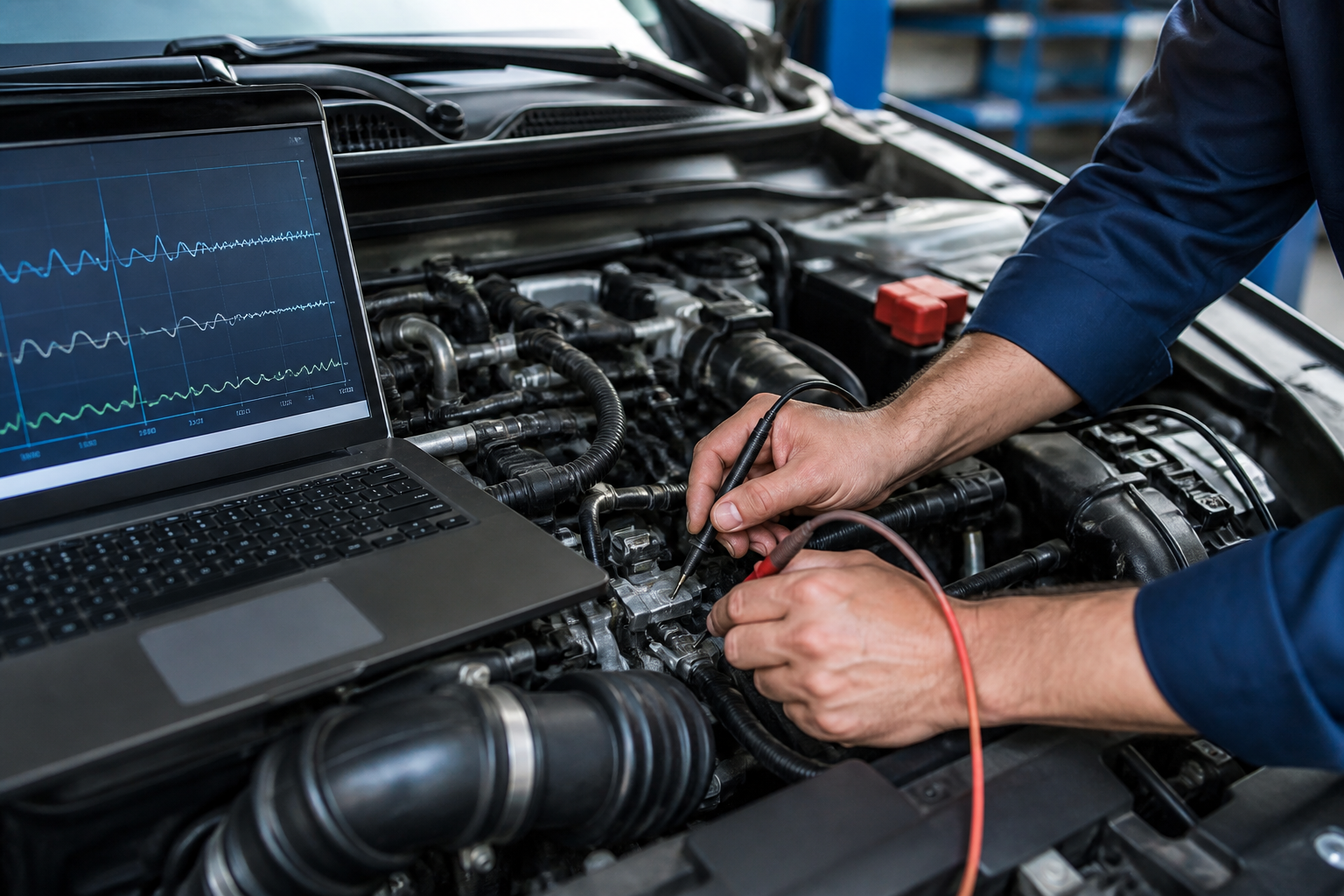
Depending on the results, testing may involve a multimeter, pressure gauge, smoke machine, oscilloscope or physical inspection. The workshop’s service information and team background help explain the range of work available in New Lynn.
Drivers can make the diagnostic process more efficient by recording exactly when the symptom appears. Note engine temperature, road speed, weather, fuel level, recent repairs and whether warning lights flash or remain steady. A short video or photo of the dashboard can help when the fault disappears before arrival. Do not repeatedly clear codes or disconnect the battery unless necessary, because stored freeze-frame information may be lost. Bring spare keys if an immobiliser issue is possible and describe any aftermarket accessories. Good symptom information helps the technician reproduce the fault, choose targeted tests and avoid replacing parts merely because they appear in a code description.
Ask for the diagnostic findings to be explained before repairs begin. A clear estimate should identify the confirmed fault, recommended work and any further testing that may become necessary after the first issue is corrected.
Expert Insight
A fault code is a clue, not a parts order. For example, a sensor-related code may be caused by damaged wiring, an air leak, low system voltage or a mechanical problem. Diagnosis should prove the cause before an expensive component is replaced.
How long does a car diagnostic test take?
A basic scan can be quick, but tracing an intermittent or complex problem may require more time and additional tests. Ask what level of diagnosis is included.
Can a scan find every car problem?
No. Mechanical noises, wear and some intermittent faults may not create codes. Hands-on inspection and testing remain essential.
Contact AR Auto Tech
If a warning light, starting issue or performance problem needs investigation, contact AR Auto Tech in New Lynn. Describe the symptoms and arrange a diagnostic assessment before authorising parts replacement.